 What is self help
The gifts of the spirit as spiritual coaching.
Currently, in the XXI century, there are many self-help techniques in the market: NLP, Coaching, Hypnosis. All these techniques are a series of applied knowledge for personal improvement and so achieve happiness, increase self-esteem, reach the proposed goals and dreams. In the market of self-help there is "the sale of smoke", the results of all this, at the moment to be put into practice is questionable because in many cases what is taught, what is transmitted is superficial and unethical.
These are the critical points in the self-help processes:
1) Acquire Wisdom:
We live in the routine, in mediocrity and we need changes, the first thing to start with personal improvement plans is to acquire science, wisdom, to reduce the error. "In any personal improvement process, the reduction of error is the key". Without knowledge we can not work on the error.
2) Gift of Science:
Once we establish plans and we want to implement them we need the progressivity, of the progressive thinking, the goals must be progressive, measurable and achievable over time. Example: I want to start the engineering career, I set the goal of achieving the title. Then what follows is: when ?, for what year I plan to achieve the title. Every goal has to have a time. The great and ambitious goals are useless if they have no time or date. Progressive thinking is what is known as the Gift of Knowledge.
3) Act ethically:
The plans, objectives and the ways to achieve them must be "ethical", if not, is not self-help. Ethics and spirituality explain that "there are two ways".
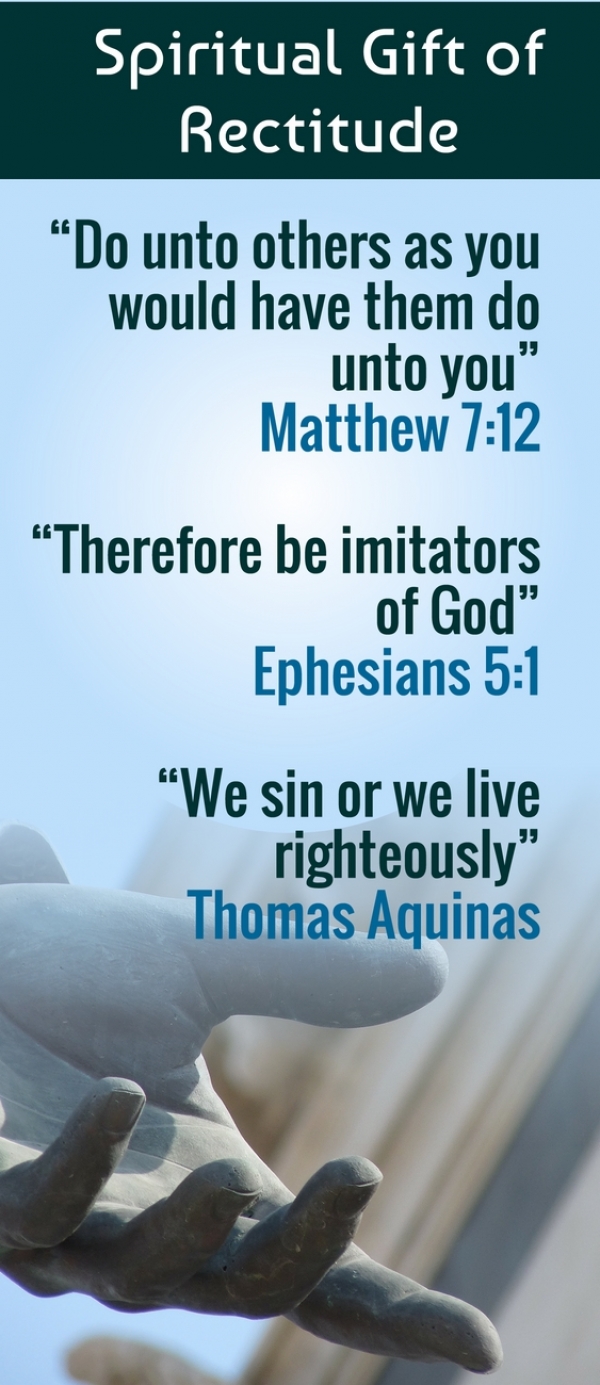
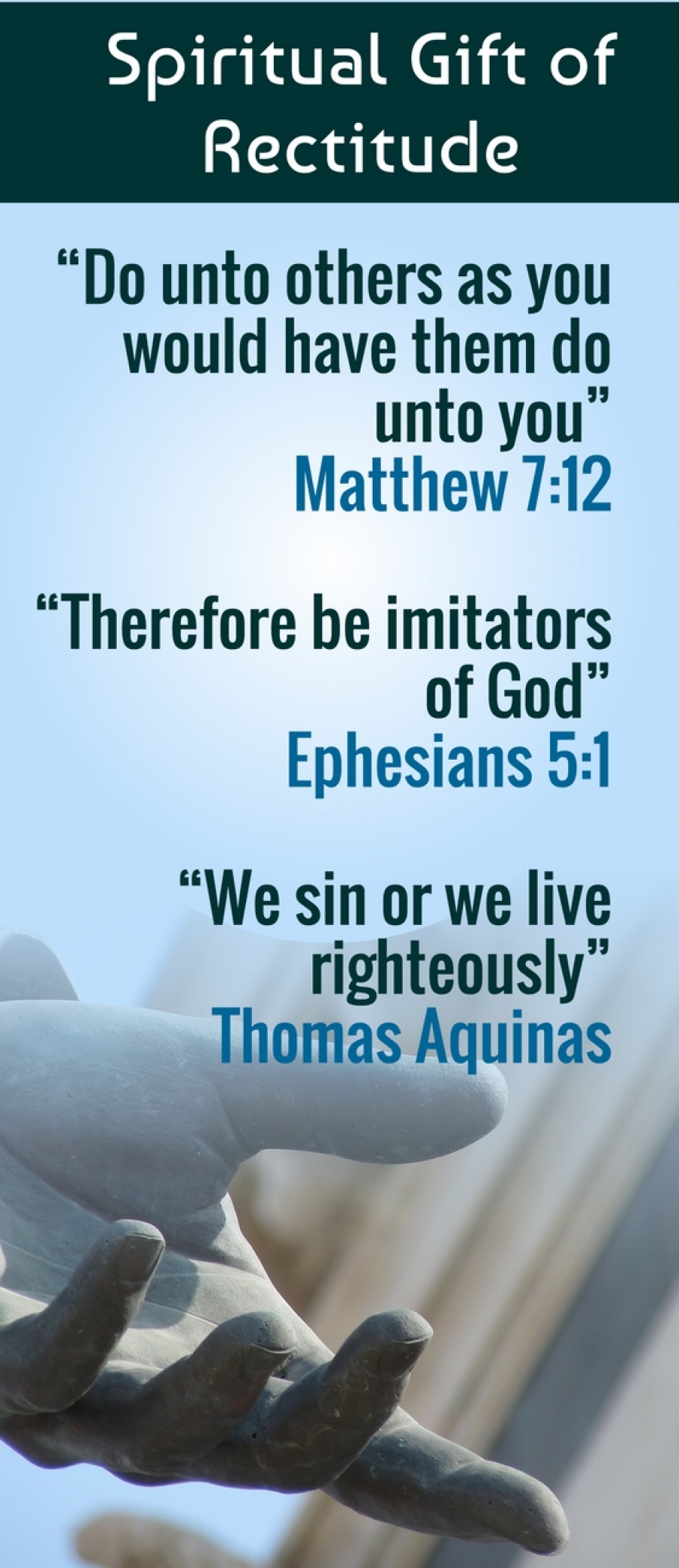
The Golden Rule, "Do unto others as you would have them do unto you", Matthew 7:12, is also known as the spiritual gift of rectitude or imitate God. It is the definition of the good and the ethical behavior, the Golden Rule is empathy, is to put ourselves in the place of the other. The best-known case of Righteousness is the parable of the Good Samaritan in the Gospel of Luke (Luke 10). But this parable goes beyond, explains the ethical behavior of people: we sin, that is to say we practice evil or we live righteously, that is to say we live the good. People are edifying or destructive, good or bad. There is no middle ground, white or black there is no gray. The golden rule is the path to spiritual illumination, the sin instead is a form of error.
The collaboration is essential for the achievement of objectives, the ethical people are collaborative people, that is, people who improve themselves and the environment. The best example of collaboration is the blessed life. To motivate people is to encourage them to collaborate with the results.
Know where I'm going: the ultimate goals of life: works of the flesh vs. Fruits of the spirit:
Life is like chess, you play with the whites or with the blacks. And this relates to the works, to which tend towards those who practice the sin? Towards the works of the flesh (Galatians 5:19-21) which are: idolatry, witchcraft, enemity, adultery, fornication, filth.
And where tends those who live righteously? To the fruits of the spirit: joy, peace, patience, kindness, faith, meekness, temperance (Galatians 5:22-23). En this consists the study of ethics, how we choose, how is our relationship with the neighbor and the divine.
Taking into account these points that define the success or failure of a self-improvement plan, we can say that a successful self-help is a blessed self-help, which takes into account the best virtues of man, that is, the virtues that God infuses into us, through Grace, the best we have somehow comes from the divine.


 What is self help